

EMIL CADOO
 Share on Facebook
 Share on Twitter
 Subscribe
 Comments
EMIL CADOO
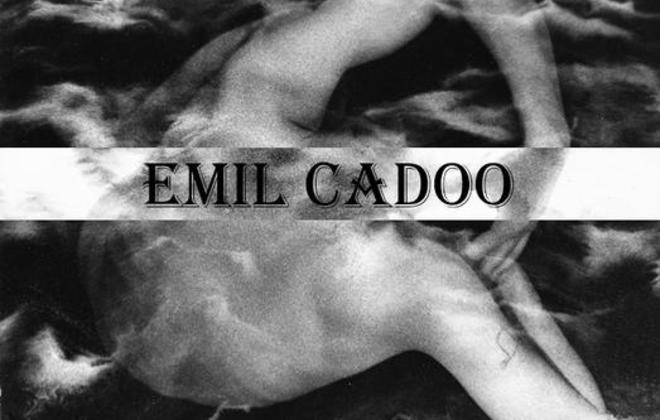
Seeing Emil Cadoo's photographs today, it's hard to believe they were once considered controversial enough to be caught up in the bitter censorship disputes of the McCarthy era - a bit like looking at Impressionist reproductions on a chocolate box lid and wondering why their work was ever banned. But knowing the context opens up different ways to read the works on show at the White Space Gallery which, at face value, might otherwise seem overly romantic, dreamy, or even sentimental.
Cadoo is perhaps best known for his illustrative work in Evergreen Review, an American publication featuring writing by Samuel Beckett, Antonin Artaud and Henry Miller, as well as for his photojournalism and portraits of black political and cultural icons. However, it's his photo series of embracing couples, Caucasian and heterosexual and contemplative studies of statues which make up the bulk of the work on show at the White Space Gallery. These photographs are all black and white, created using a technique of double exposure which gives them a washed out, faded effect.
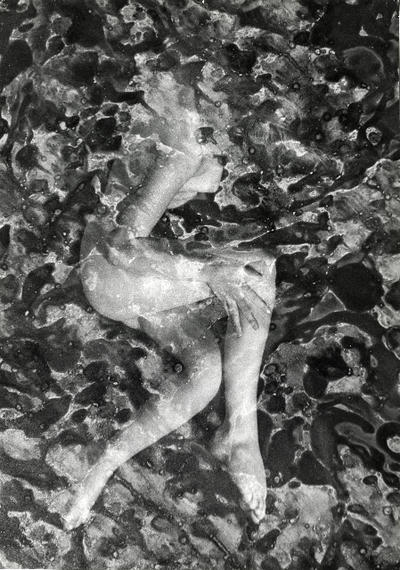
Sexus
The 1963 sequence of nudes displayed here was used to illustrate Henry Miller's Sexus, a work banned in the English-speaking world because of its sexually explicit content. Today it isn't the explicitness of Cadoo's photographs which strikes the viewer, mainly because by today's standards they don't really count as explicit. They are beautifully composed shots of beautiful, entwined figures, the overlaid effects and patterns working to distance them from reality and presenting them as almost mythical forms. What is striking though is the discrepancy which develops between Cadoo's portraits of contemporary figures and Harlem street life, and the dreamy, idealised quality of the Sexus series and photographs Double Exposure/ Statue (1964) and Reverie (1963).

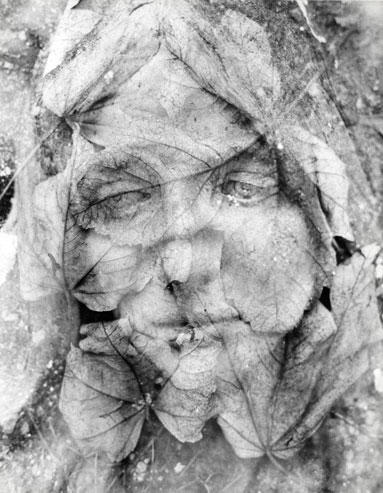
These photographs superimpose layers of organic images over and around faces which, in black and white, take on the greyness of worn and overgrown statues. Cadoo's photographs have often been related to Rodin's sculptures in an effort to justify their erotic content (isn't this what respected artists, like Rodin, have always been doing?) but making a sculpture and photographing a sculpture, or statue, are different. A statue is a permanent thing but Cadoo's statue-photographs, androgynous faces with superimposed wood grain, leaves and wash effects, give an impression of ageing, wear and decomposition.
Critic Mark Grisbourne writes that the effect of these photographs is "like looking through a pane of glass on a rainy day at the statuary in Pere Lachaise", and that sums it up well. Portrait (1963), the first work seen on entering the gallery and one of the most intriguing, is a similarly strange piece - a woman's face emerges from a background of bark-like texture. It's almost like looking up at the clouds, or at shadows, and seeing a face form for a second, only for it to disappear again.
Cadoo cleverly uses and develops the same photographic techniques to create dramatically different effects, which can be hard to reconcile. More than just pretty pictures, when seen in relation to each other and with historical context, Cadoo's photos reveal his engagement with the struggle for black and homosexual rights. Such awareness complements his natural feel for beauty, a sense of melancholy and the ability to shock. Cadoo's body of work speaks of an artist who was actively engaged with his time but whose self-enforced exile left him with a sense of distance and displacement still visible, sometimes overtly and sometimes symbolically, in his photographs today.
Emil Cadoo is on display until 6 May at the White Space Gallery.
Don't Panic attempt to credit photographers and content owners wherever possible, however due to the sheer size and nature of the internet this is sometimes impractical or impossible. If you see any images on our site which you believe belong to yourself or another and we have incorrectly used it please let us know at panic@dontpaniconline.com and we will respond asap.
MORE FROM DON'T PANIC
-
Banksy Creates Simpsons Credits
-

Most Ill-suited Politicians
-

Alexander Ponomarev
-
Pulled Apart By Horses
-

Exposure 10
-

Castlevania: Lords of Shadow
-

Matthew Williamson
-

Maurizio Anzeri
-

Whatever Happened to Mail Art?
-

In Dreams and Michael Patterson-Carver
-

I’m a Dead Celebrity, Exploit Me!
-
Carthy & Swarbrick at Boardwalk





Comments