There's no way of improving on this story, so I'm just gonna post it as it comes in press release:
Kif, a new book by photographer Seba Kurtis documents a journey inspired by friendship and loss and tells the tender tale of a small corner of the international drug trade. Seba and Dodo became close sharing a flat as illegal immigrants in Tenerife. The friends took separate paths – Kurtis marrying and moving to the UK to follow his career as a photographer, while Dodo, after a period working in construction followed by a one-off fund-raising expedition to Morocco as a drug mule, died young and alone in Barcelona.
When the pair last met, Dodo was rhapsodised about Chefchaouen, the northern Moroccan province where 90,000 households are modestly sustained on the cultivation of cannabis that supplies the bulk of the European market. Like many a backpacker before him, Dodo was enchanted by the whitewashed medinas that cling to the slopes of Rif mountains and the peaceful farms that nestle above them. But he was there to smuggle hashish – or kif, as its known locally – and too distracted to engage in the ritual of creating a photographic record of his journey.
After Dodo’s death, Kurtis retraced the journey in tribute to a friend, to Chefchaouen, to the farmers who raise a crop that happens to be illegal and fill the coffers of the corrupt, and the trade’s small-time carriers who exploit their bodies as a hold for contraband cargo.
Kif, a new book by photographer Seba Kurtis documents a
journey inspired by friendship and loss and tells the tender
tale of a small corner of the international drug trade.
Seba and Dodo became close sharing a flat as illegal
immigrants in Tenerife. The friends took separate paths –
Kurtis marrying and moving to the UK to follow his career
as a photographer, while Dodo, after a period working in
construction followed by a one-off fund-raising expedition to
Morocco as a drug mule, died young and alone in Barcelona.
When the pair last met, Dodo was rhapsodised about
Chefchaouen, the northern Moroccan province where 90,000
households are modestly sustained on the cultivation of
cannabis that supplies the bulk of the European market.
Like many a backpacker before him, Dodo was enchanted
by the whitewashed medinas that cling to the slopes of Rif
mountains and the peaceful farms that nestle above them.
But he was there to smuggle hashish – or kif, as its known
locally – and too distracted to engage in the ritual of creating
a photographic record of his journey.
After Dodo’s death, Kurtis retraced the journey in tribute to a
friend, to Chefchaouen, to the farmers who raise a crop that
happens to be illegal and fill the coffers of the corrupt, and the
trade’s small-time carriers who exploit their bodies as a hold
for contraband cargo.
Kif, a new book by photographer Seba Kurtis documents a
journey inspired by friendship and loss and tells the tender
tale of a small corner of the international drug trade.
Seba and Dodo became close sharing a flat as illegal
immigrants in Tenerife. The friends took separate paths –
Kurtis marrying and moving to the UK to follow his career
as a photographer, while Dodo, after a period working in
construction followed by a one-off fund-raising expedition to
Morocco as a drug mule, died young and alone in Barcelona.
When the pair last met, Dodo was rhapsodised about
Chefchaouen, the northern Moroccan province where 90,000
households are modestly sustained on the cultivation of
cannabis that supplies the bulk of the European market.
Like many a backpacker before him, Dodo was enchanted
by the whitewashed medinas that cling to the slopes of Rif
mountains and the peaceful farms that nestle above them.
But he was there to smuggle hashish – or kif, as its known
locally – and too distracted to engage in the ritual of creating
a photographic record of his journey.
After Dodo’s death, Kurtis retraced the journey in tribute to a
friend, to Chefchaouen, to the farmers who raise a crop that
happens to be illegal and fill the coffers of the corrupt, and the
trade’s small-time carriers who exploit their bodies as a hold
for contraband cargo.
Kif, a new book by photographer Seba Kurtis documents a
journey inspired by friendship and loss and tells the tender
tale of a small corner of the international drug trade.
Seba and Dodo became close sharing a flat as illegal
immigrants in Tenerife. The friends took separate paths –
Kurtis marrying and moving to the UK to follow his career
as a photographer, while Dodo, after a period working in
construction followed by a one-off fund-raising expedition to
Morocco as a drug mule, died young and alone in Barcelona.
When the pair last met, Dodo was rhapsodised about
Chefchaouen, the northern Moroccan province where 90,000
households are modestly sustained on the cultivation of
cannabis that supplies the bulk of the European market.
Like many a backpacker before him, Dodo was enchanted
by the whitewashed medinas that cling to the slopes of Rif
mountains and the peaceful farms that nestle above them.
But he was there to smuggle hashish – or kif, as its known
locally – and too distracted to engage in the ritual of creating
a photographic record of his journey.
After Dodo’s death, Kurtis retraced the journey in tribute to a
friend, to Chefchaouen, to the farmers who raise a crop that
happens to be illegal and fill the coffers of the corrupt, and the
trade’s small-time carriers who exploit their bodies as a hold
for contraband cargo.
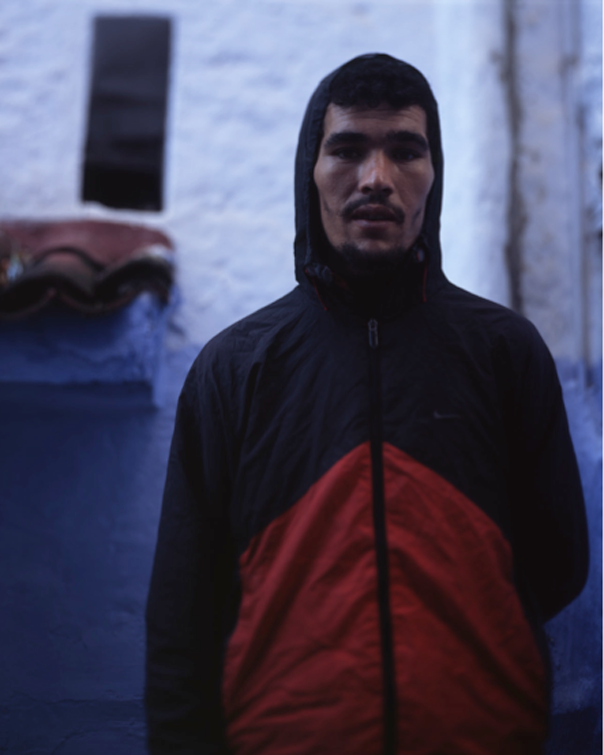
The photographs from Kif will be exhibited at The Wayward Gallery, 47 Mowlem Street, London E2 9HE, from Friday 5 until Sunday 14 April.
Private view: 6–9pm, Thursday 4 April, see you there.



 Share on Facebook
 Share on Twitter
 Subscribe
 Comments











Comments